



In a stunning 24-hour turn of events, the mathematical world has been rocked by not one, but two separate claims to have solved the Riemann Hypothesis—a 167-year-old problem widely considered the most famous unsolved puzzle in mathematics.
On November 20, 2026, an Anthropic mathematician announced that he and the AI model Claude had discovered a proof. Just hours later, Stanford University rushed out a competing, strictly “all-human” draft proof.
1. The AI Claim: Anthropic and Claude
On Friday, November 20, Anthropic mathematician Levent Alpöge posted a four-page note claiming that, working alongside Claude, he had found a proof for the Generalized Riemann Hypothesis.
Rather than publishing a traditional academic paper, Alpöge released 14 massive archive files containing roughly 239 megabytes of data and over 175,000 source files written in Lean, a formal proof-assistant programming language used to verify mathematical logic. (On the same day, Alpöge and mathematician Tristan Buckmaster also posted a separate Claude-assisted paper claiming a breakthrough on the Navier–Stokes equations, another Millennium Prize Problem.)
2. The Human Counter-Punch: Stanford’s Hurried Release
Hours after Alpöge’s announcement went viral, Stanford mathematics professor and American Mathematical Society (AMS) president Ravi Vakil published a “hurried announcement” on his blog. Vakil shared an independent draft proof of the Generalized Riemann Hypothesis written by mathematician Alessandro Masullo.
“It is all human, with no AI,” Vakil emphasized in his post.
According to Vakil, renowned Stanford number theorist Brian Conrad had been quietly reviewing Masullo’s work for months. The original plan was for Masullo to spend another year at Stanford refining the manuscript before going public, but Anthropic’s sudden AI announcement forced the team to release their draft immediately.
What Is the Riemann Hypothesis, and Why Does It Matter?
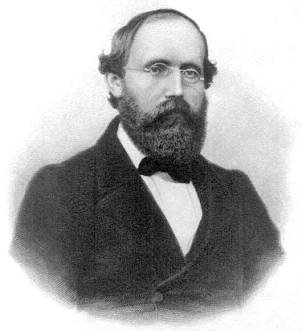
Proposed by German mathematician Bernhard Riemann in 1859, the hypothesis deals with the distribution of prime numbers. While prime numbers seem to appear randomly, Riemann discovered that their distribution is closely tied to the behavior of a special mathematical function called the Riemann zeta function.
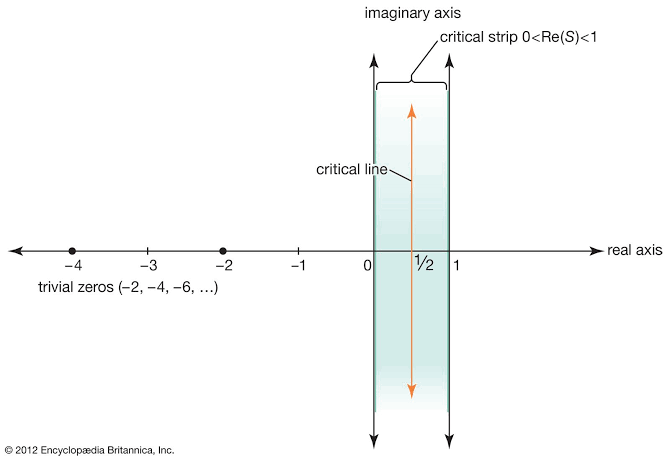
The hypothesis states that all “nontrivial zeros” of this function lie along a single vertical line on a graph (known as the critical line).
- Why it matters: Hundreds of major theorems in number theory and modern cryptography have been written under the assumption that the Riemann Hypothesis is true. Proving it turns all of those assumptions into rock-solid mathematical facts.
- The Prize: It is one of the Clay Mathematics Institute’s seven Millennium Prize Problems, carrying a $1 million reward for a verified solution.
Has It Actually Been Solved? Experts Urge Caution
Before the textbooks are rewritten, both proofs face an intense gauntlet of peer review—and cracks are already showing in the rushed releases.
About eight hours after sharing Masullo’s human-written draft, Ravi Vakil updated his blog to note that several mathematicians—ironically using various AI models to assist their checks—had already flagged issues in the proposed proof that will need to be resolved.
Meanwhile, Alpöge’s AI-generated Lean code must be thoroughly audited by independent experts to ensure the code actually proves the hypothesis itself without hidden loopholes or faulty definitions. Furthermore, under the Clay Mathematics Institute’s strict rules, a personal website post and raw code do not qualify for the $1 million prize. To claim the prize, a readable proof must be published in a peer-reviewed journal and survive at least two years of global mathematical consensus.
For now, the 167-year-old mystery remains officially open—but the race between human intuition and artificial intelligence just entered uncharted territory.