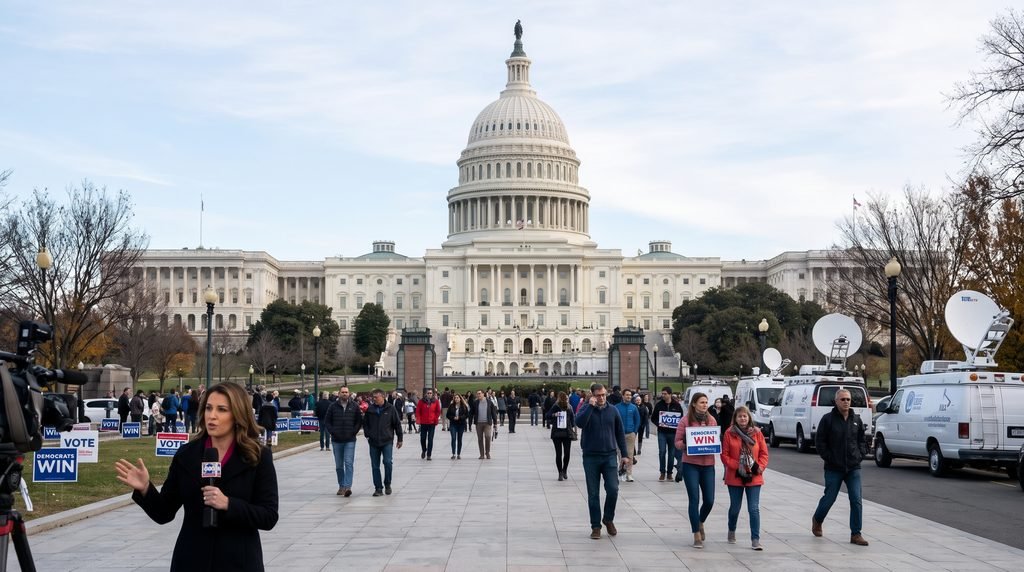




WASHINGTON — In a seismic realignment of American politics, Democrats have captured majorities in both the U.S. House of Representatives and the Senate following a sweeping midterm election wave. The dramatic dual-chamber flip upends expectations and delivers a decisive check on Republican control in the nation’s capital.
According to projections and reporting by The New York Times and POLITICO, Democratic contenders overperformed across traditional battlegrounds and pierced deep-red strongholds, converting dozens of competitive House seats while notching pivotal Senate flips.
A Remade Electoral Map
Heading into Election Day, analysts largely projected narrow margins, with Democrats viewed as having an edge in reclaiming the House while facing an arduous uphill battle to wrest control of the Senate. Instead, high voter turnout driven by kitchen-table economic anxieties, healthcare access, and widespread pushback against the White House’s legislative priorities catalyzed an across-the-board surge.
In the House, Democrats quickly exceeded the threshold needed to gain the speaker’s gavel, flipping contested suburban and rural districts across the Sun Belt, Rust Belt, and coastal corridors. Concurrently, nail-biter Senate contests in key battlegrounds tipped one after another into the Democratic column, sealing full congressional majorities.
Democratic leadership hailed the decisive sweep as a clear popular mandate:
“The American people have sent an unmistakable message from coast to coast,” Democratic leaders declared Tuesday night. “Voters chose balance, accountability, and practical solutions over division.”

What Divided Government Means Next
The results dramatically reshape the legislative landscape and the remaining two years of the presidential term. With Democrats steering both chambers:
- Investigative Oversight: Democratic committee chairs will wield broad subpoena authority, initiating rigorous oversight into federal agencies, executive orders, and administrative appointments.
- Judicial & Executive Nominations: Securing the Senate majority restores Democratic control over judicial confirmations and Cabinet appointments, effectively halting unilateral conservative appointments to federal courts.
- The Legislative Battleground: Sweeping Republican policy items will face an immediate roadblock on Capitol Hill. The White House will either need to negotiate bipartisan fiscal and budget packages or rely heavily on executive actions and presidential veto power.
The incoming 119th Congress will convene in January to formally organize leadership, set committee assignments, and lay out an ambitious legislative agenda focused on lowering consumer costs, strengthening social safety nets, and reasserting congressional authority.